RENAULT re.think
THE CASE
FROM PIXELS TO FORM.
The creative vision came from Renault’s design leadership. Night Wolves Studio translated that vision into the finished CGI production, from look development and motion design through animation, lighting, rendering, compositing, editing and final delivery.
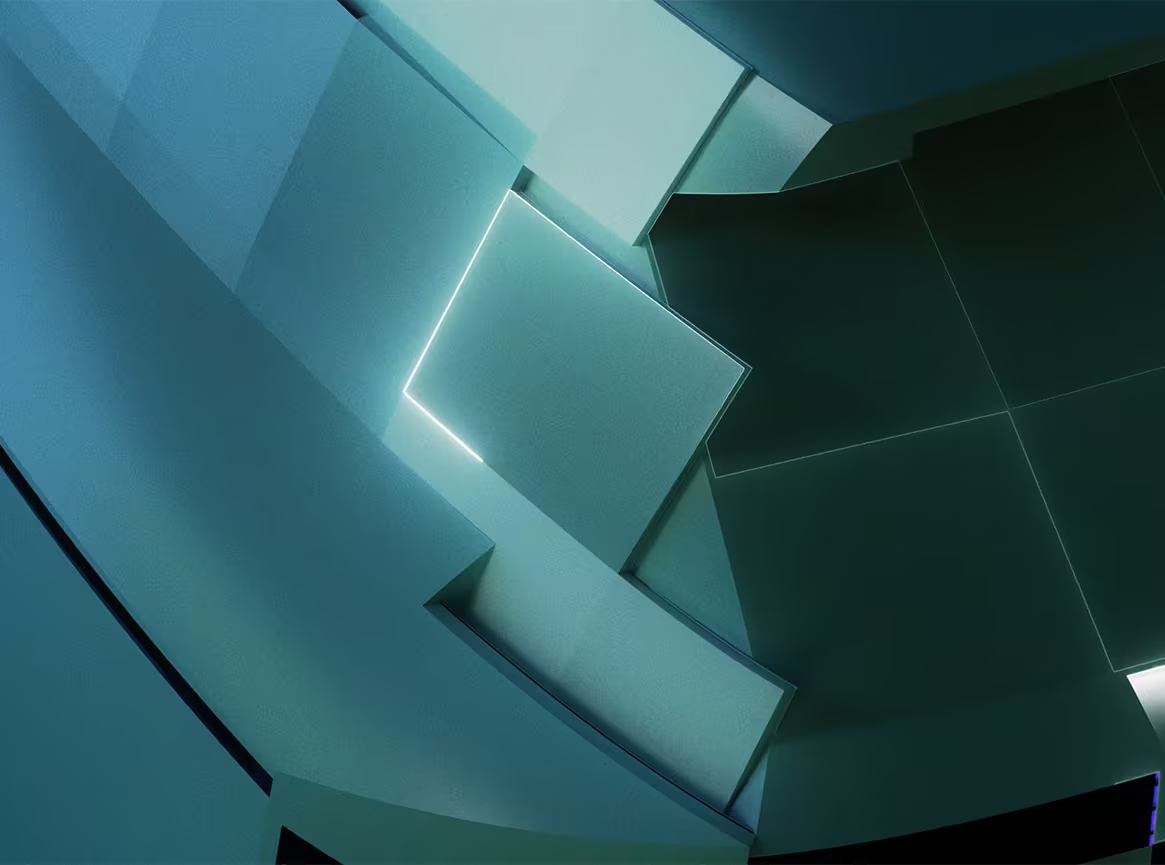
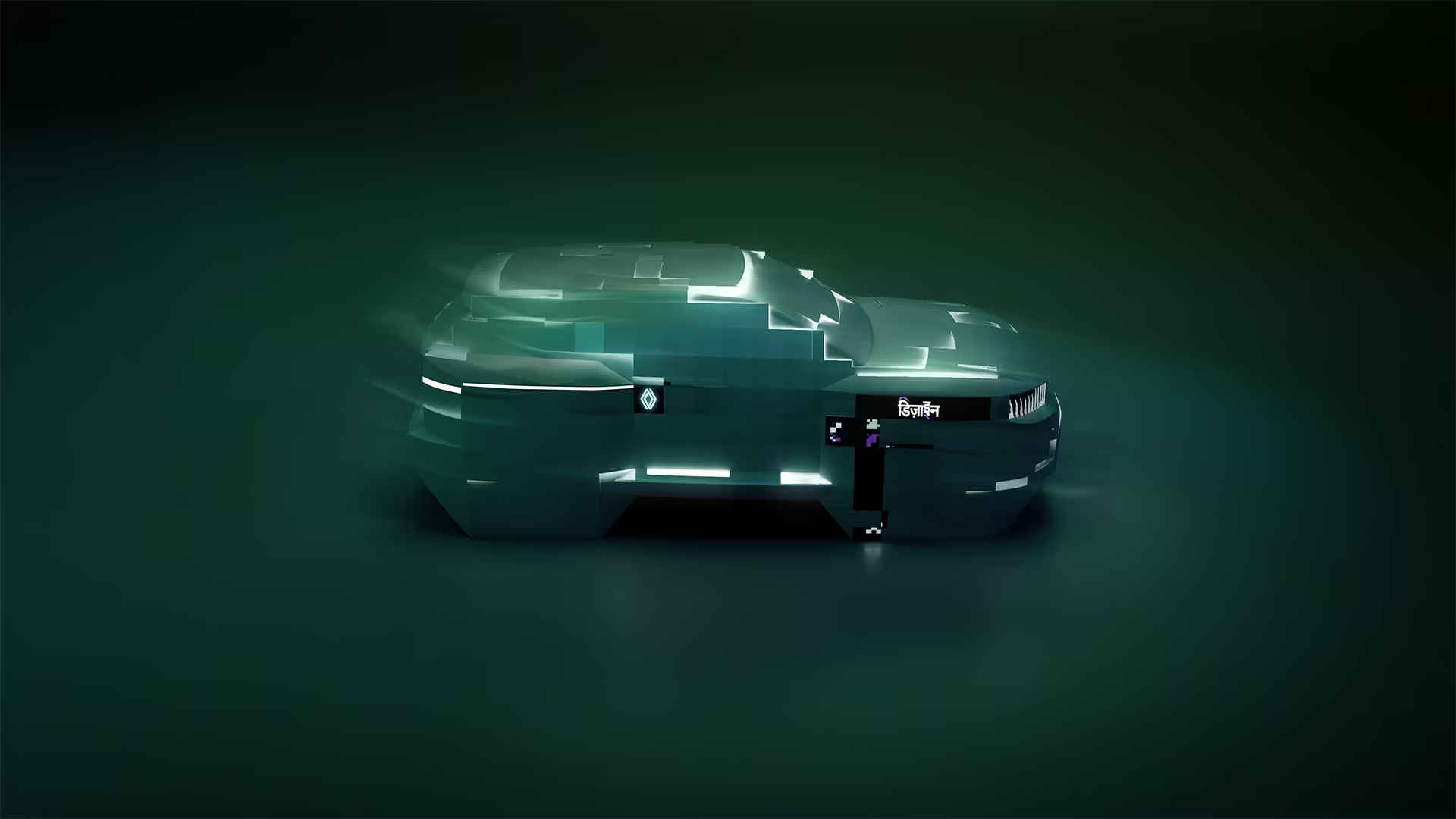
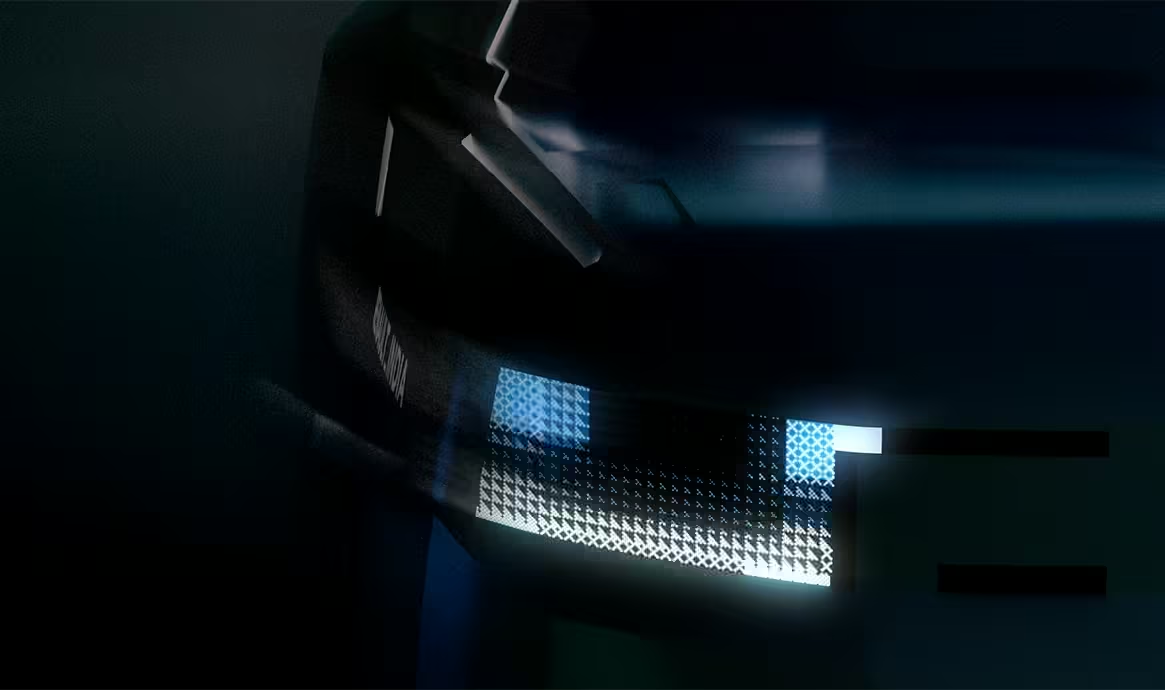
At the centre of the film was a monumental automotive sculpture emerging from a field of dynamic pixels. The pixels gradually transformed into the final form, creating the visual progression that carried the film.
The challenge was to make the digital world feel infinite and immersive while maintaining precise control over pixel movement, lighting and image quality at native 8K. Designed for panoramic large-screen presentation, the film had to withstand scrutiny at scale and move from concept to final delivery within approximately four weeks.
THE APPROACH
FROM PIXELS TO FORM.
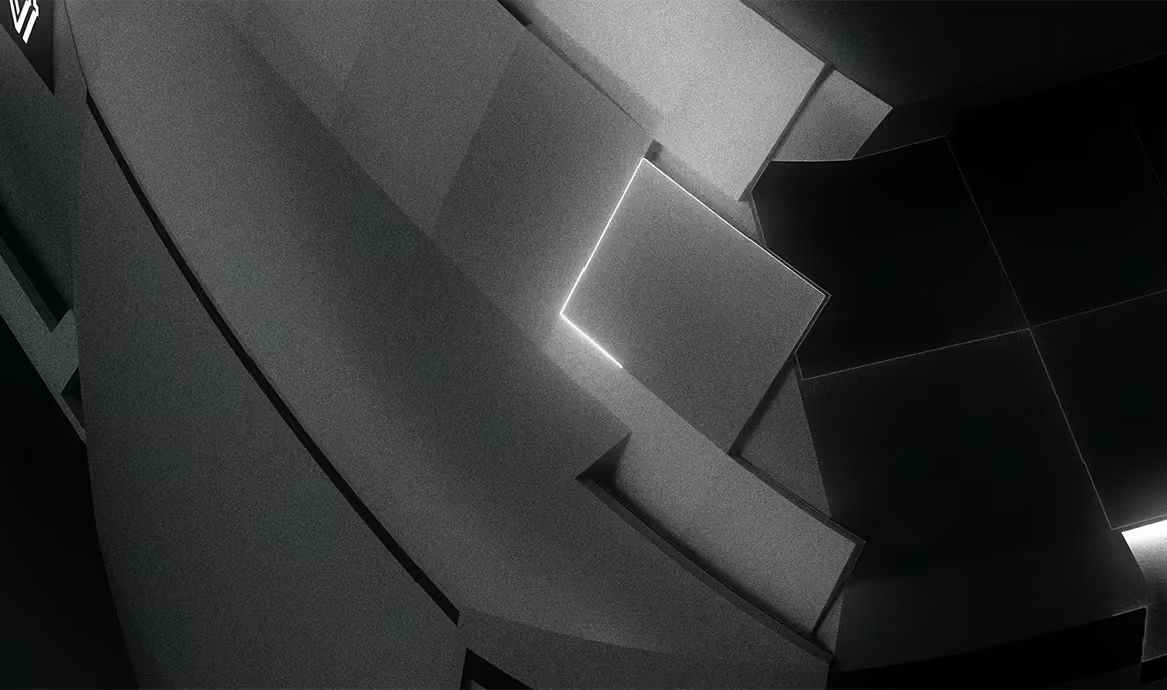
The transformation began with a field of individual pixels that flipped, assembled and moved through the environment, gradually building toward the silhouette of the automotive sculpture.
The formations increased in scale and density as the sculpture emerged. The environment was designed without a visible horizon, creating a continuous digital landscape around the vehicle. The sculpture remained neutral, while animated lighting introduced colour transitions across the environment and form.
BUILT FOR 8K.
The entire film was produced natively in 8K using Cinema 4D and Redshift, including pixel effects, lighting, rendering and compositing.
Pixel behaviour, lighting and fine image detail had to hold at the final output resolution rather than relying on a lower-resolution workflow. Render times averaged approximately 14–15 minutes per frame on NVIDIA RTX 5090 GPUs with maximum available VRAM.
FOUR WEEKS FROM PRODUCTION TO DELIVERY.
With pixel-based simulations, complex lighting and native 8K rendering running in parallel, the production maintained momentum across animation, look development, rendering and finishing without compromising the final image.
THE TECHNOLOGY
PIXEL, LIGHTS & ANIMATION
The pixel transformation required individual elements to move from a simple digital field into a controlled formation that could progressively reveal the sculpture.
The team researched and developed the light simulations alongside the animation, refining how the elements flipped, moved and assembled throughout the sequence.
Animated lighting was also used to introduce the colour transitions. Rather than applying colour directly to the sculpture, light became part of the transformation as the form emerged.
The production pipeline was built around Cinema 4D and Redshift, allowing the pixel systems, lighting, rendering and compositing to be developed together and carried through to native 8K output.
Testing remained part of production throughout, focused on balancing pixel behaviour, lighting, image quality and the four-week delivery window.
THE RESULT
ONE VISUAL LANGUAGE. MULTIPLE FORMATS.
The final film translated Renault’s “re.think” idea into a single digital visual world, from a field of pixels to an emerging automotive sculpture.
The production was completed in approximately four weeks and delivered as a native 8K film for panoramic large-format presentation, alongside supporting assets for digital and social use.
Production
8K Native CGI production
4K WEEKS Production to final delivery
Delivered
8K Motion Film Panoramic large-format display
CGI Stills
Digital & Social Assets Multiple aspect ratios
Outputs
Panoramic Display · Digital · Social